Why Are Dog Grooming Blades So Confusing?
And Why Guard Combs Speak in Letters, Numbers, and Colors
If you've ever tried to explain grooming blade lengths to a new groomer, a bather, a salon owner, or a very brave dog parent who bought clippers during lockdown, you've probably watched their face slowly lose trust in the universe.
A #4 blade leaves more hair than a #7.
A #10 is shorter than both of them.
A #30 is not thirty times longer.
A #40 is basically whispering near the skin.
Then guard combs enter the chat wearing colors, letters, numbers, and absolutely no concern for your mental health.
For groomers, this all becomes second nature. We stop asking why and start saying things like, "Use a #30 under the 0 comb," as if that sentence would make sense to anyone outside our profession.
But the system actually tells a story about where our tools came from, how grooming borrowed language from barbering, and why professional shorthand is not always beginner-friendly.
Blade Numbers Are Not Length Numbers
The first thing to understand is that clipper blade numbers are not really "length numbers" in the way most people expect.
They are inherited tool sizes.
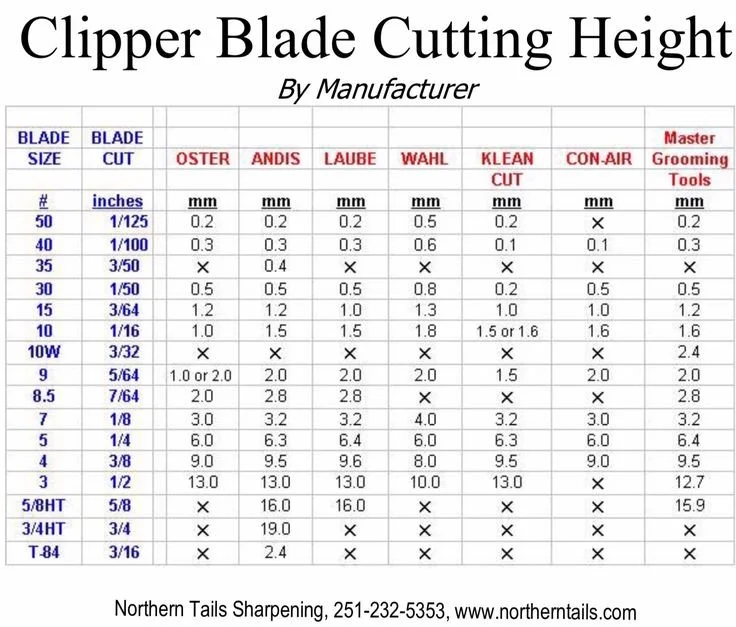
With detachable grooming blades, the higher the blade number, the shorter the hair left behind. For example:
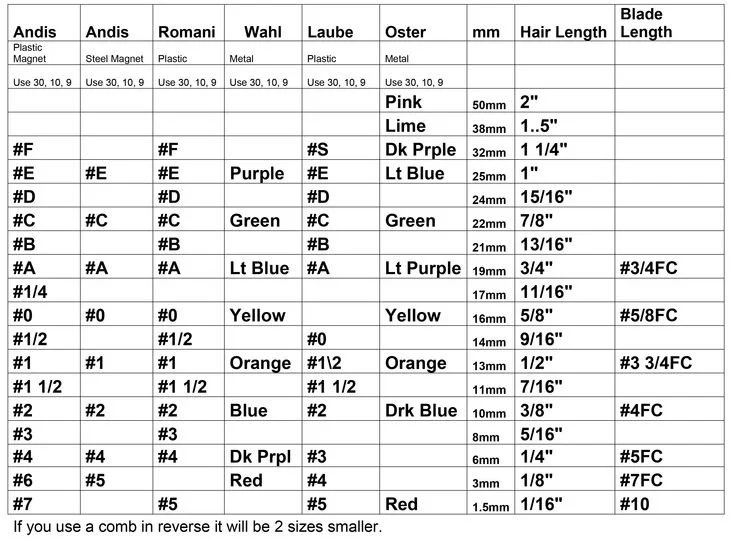
#40 leaves about 1/100 inch
#30 leaves about 1/50 inch
#10 leaves about 1/16 inch
#7FC leaves about 1/8 inch
#5FC leaves about 1/4 inch
#4FC leaves about 3/8 inch
So yes, the numbers go up while the coat length goes down.
That is not your imagination.
That is the system.
Why Is the Numbering Backward?
This language did not start with doodles, teddy bear trims, or clients asking for "short but not shaved."
It comes from the larger clipper and barbering world.
Wahl traces its company history to the invention of the first practical electric hair clipper in 1919. Andis dates its clipper history to 1922, when Mathew Andis created the first generation of what became the Master Clipper.
These tools were designed for professionals first—not for modern pet parents trying to decode a haircut request from Instagram.
The safest way to explain blade-number origins is this:
Blade numbers are old professional size names, not a simple ruler.
You may hear groomers say the numbers came from tooth spacing, tooth density, or how closely the cutting surfaces were designed to work. That may be part of the history, but it is difficult to confirm with strong sources.
What we can say with confidence is that the modern system is consistent:
Higher blade number = shorter cut.
Guard Combs Follow Different Rules
Guard combs are a different creature entirely.
A guard comb, snap-on comb, or attachment comb does not replace the blade. Instead, it fits over a blade and creates distance between the blade and the coat. That distance is what leaves the hair longer.
Wahl describes its stainless-steel attachment combs as adding eight cutting lengths from 1/8 inch to 1 inch and recommends using them over a #30 blade for best results.
Andis also offers universal stainless-steel combs ranging from 1/8 inch to 1 inch that fit #10 and #30 blades.
Why the Labels Get Weird
This is where the language becomes especially frustrating.
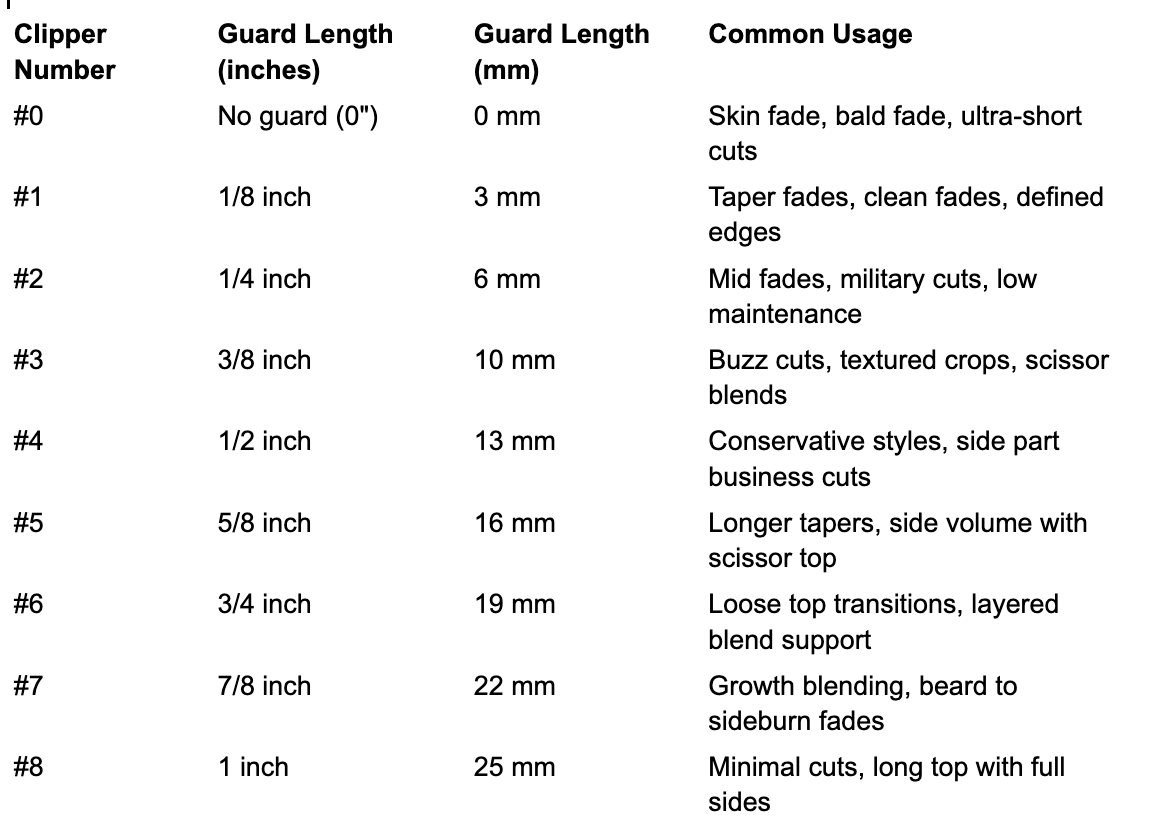
Human clipper guards usually follow a simple system:
Higher guard number = longer hair
For example, Wahl's human clipper guide lists:
#1 guard = 1/8 inch
#8 guard = 1 inch
That makes sense to most people.
Small number, short cut.
Big number, longer cut.
We love when numbers behave.
Pet grooming guard combs, however, do not always follow that logic.
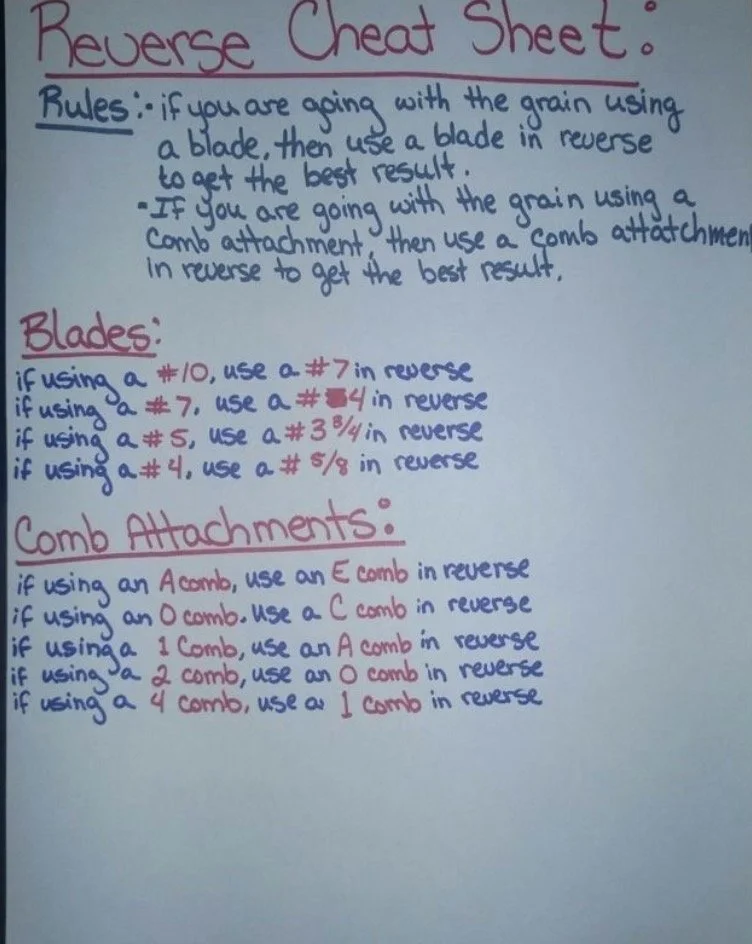
Some common grooming comb sets are labeled like this:
#5 = 1/8 inch
#4 = 1/4 inch
#2 = 3/8 inch
#1 = 1/2 inch
#0 = 5/8 inch
#A = 3/4 inch
#C = 7/8 inch
#E = 1 inch
In that system, the #5 comb is the shortest and the #E comb is the longest.
That is why experienced groomers learn to trust the actual inch or millimeter measurement rather than the label alone.
What Do the Letters Mean?
The letters are best understood as manufacturer shorthand.
They are not universal grooming math.
They are simply part of a labeling system that became familiar because groomers used the same comb sets repeatedly.
Once enough groomers know that the yellow 0 comb or blue E comb equals a specific length, the shorthand sticks.
It becomes salon language.
Why Are Guard Combs Color-Coded?
The colors are actually the least mysterious part of the system.
Groomers work fast. We switch tools constantly and often need to grab the right length without squinting at tiny stamped numbers.
Manufacturers describe color coding as a way to identify lengths quickly and stay organized.
In real salon language, that means:
"I need the purple one, not the red one, because I am not emotionally prepared to explain that mistake."
There is one important catch:
Colors are helpful, but they are not sacred.
A red comb in one system may not mean the same thing as a red comb in another. Some brands line up closely, but color should never be treated as the final authority.
The true length is the inch or millimeter marking.
The Simple Version:
If you only remember three things, remember these:
Blades
Blades are cutting tools with an inherited numbering system.
Higher blade number = shorter coat.
Guard Combs
Guard combs create distance between the blade and the coat.
They leave more hair, but their labels vary by brand and set.
Colors
Colors are speed cues.
They help groomers work faster, but the actual length marking matters most.
So Why Is Grooming Language So Confusing?
Because it was never designed to be beginner-friendly.
It was designed to identify tools.
Groomers learned the system because we had to. Then we built an entire professional language around it.
And somehow, despite all of that, we still know exactly what we mean when we say:
"Use a #30 under the A comb, skim the tuck-up, and don't you dare grab the #7 unless we're emotionally ready for that conversation."