
DOG SAFETY GUIDES
Save this page for quick reference!
Save these numbers now and also have them posted somewhere you can easily find them in case of an Emergency
🚨 Emergency Quick Access
Save these now—you don’t want to Google in a panic.
• 📞 Your Primary Vet: ____________________
• 🏥 Nearest Emergency Vet: ____________________
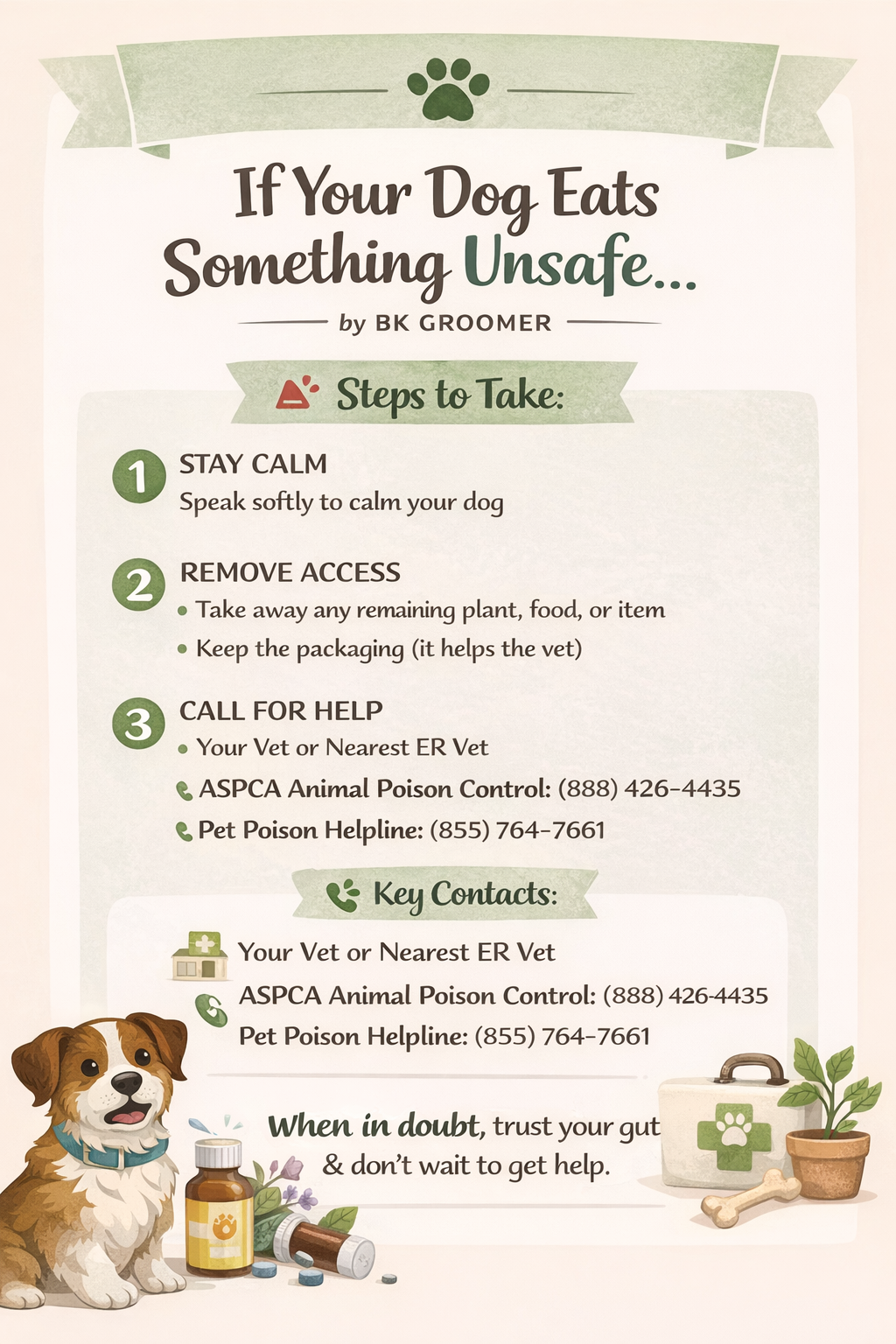
• ☎️ ASPCA Animal Poison Control Center: (888) 426-4435
• ☎️ Pet Poison Helpline: (855) 764-7661
If something feels off, trust your gut. It’s always okay to call and ask.
Click to quickly access a section below:
❌ Toxic Foods (Never)
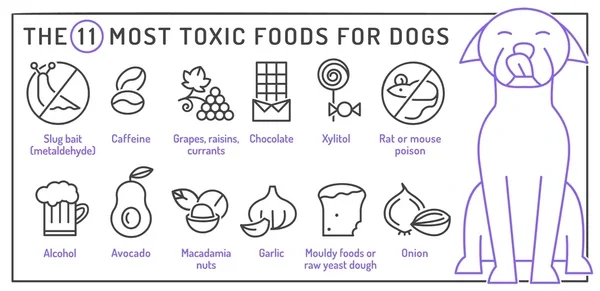
• Chocolate
• Grapes & raisins
• Xylitol (found in gum, candy, some peanut butters)
• Onions & garlic
• Alcohol
• Caffeine
• Cooked Bones (can splinter)
• Avocado
• Dairy (can cause GI issues)
• Citrus
• Fat Trimmings
• Gum & Junk Food
• Mushrooms
• Nuts
• Pits from seeds and fruits
• Peanut Butter (with xylitol or Birch sugar)
• Potato Skins & Raw Potatoes
• Rhubarb
• Salty Foods (in large amounts)
• Tea & Tea Leaves
• Xylitol Sugar Substitue (sugar free candy, gum, PB)
• Yeast & Raw Dough & Moldy Food
Food Safety
What Dogs Can And Can’t Eat
⚠️ Use Caution
• Dairy (can upset stomach)
• Fatty or greasy foods
• Refrain from seasoned or spicy foods
✅ Generally Safe (Plain & in moderation)
• Carrots
• Blueberries
• Plain chicken
• White rice
• Apples
• Bananas
• Cantaloupe
• Eggs (Cooked)
• Green Beans
• Honey- Manuka or raw, unfiltered in small amounts
• Kiwi
• Mango
• Oatmeal
• Peaches
• Peanut Butter (with real sugar)
• Pears
• Pineapple
• Potatoes (Cooked with skins removed)
• Sweet Potatoes (Cooked with skins removed)
• Pumpkin
• Rice
⚠️ Groomers Note:
Introduce any new foods into a dog’s diet gradually. Consult with a veterinarian if you have any concerns about how a particular food may affect your dog.
When in doubt—keep it simple, plain, and dog-safe.
Toxic Plants & Hidden Household Dangers
Dogs are curious.. and fast! Most emergencies happen in seconds.
🌿Toxic Plants🌿
❌ Highly Toxic
• Sago Palm (VERY DANGEROUS- even in small amounts)
• Lillies (especially for cats, still insane for dogs)
• Oleander
• Azalea/Rhododendron
• Foxglove
• Autumn Crocus
• Click this Link For a Extensive List From the ASPCA
⚠️Household Plants (often overlooked)
• Aloe Vera
• Pothos (Devil’s Ivy)
• Snake Plant
• Philodendron
• ZZ Plant
• Peace Lily
🌷Outdoor & Garden Plants to watch out for.
• Tulips (especially bulbs)
• Daffodills
• Hydrangeas
• Ivy
• Boxwood
🍄Mushrooms (Important & Often Missed )
• Click this link for more extensive information on mushrooms
•Some are extremely toxic and it’s hard to identify safely.
🧴 Hidden Household Dangers for Dogs
🧼 Cleaning Products & Chemicals
Even small amounts can cause irritation or poisoning.
• Bleach, disinfectants, floor cleaners
• Laundry detergent & pods
• Toilet bowl cleaners
• Carpet cleaners
Keep products sealed and floors dry before letting pets walk around.
🌿 Essential Oils & Fragrances
“Natural” doesn’t always mean pet-safe.
• Tea tree oil
• Eucalyptus
• Peppermint
• Diffusers (especially in small spaces)
• Candles, wax melts, air fresheners
Dogs are much more sensitive to scents than we are.
💊 Human Medications
One of the most common emergencies.
• Pain relievers (ibuprofen, acetaminophen)
• Antidepressants
• Sleep aids
• Vitamins (especially gummy types)
Never assume a human medication is safe for dogs.
🍽️ Kitchen & Food Hazards
• Trash cans (bones, spoiled food, wrappers)
• Cooked bones (splinter risk)
• Plastic packaging (can cause blockages)
• Coffee grounds & tea bags
Curious noses + unattended food = trouble fast.
🐭 Pest Control & Yard Chemicals
• Rat poison / rodenticides
• Ant and roach bait traps
• Fertilizers
• Weed killers
These are often flavored to attract animals—so pets will go for them.
🧵 Small Objects & Choking Hazards
• Socks (big one!)
• Hair ties
• Toys with small parts
• String, ribbon, floss
If it can be swallowed, it eventually might be.
🔌 Electrical & Home Hazards
• Chewing on cords
• Space heaters
• Open windows without secure screens
• Balconies
👜 Personal Items (VERY Common!)
• Gum (can contain xylitol ❗)
• Chapstick/lip balm
• Handbags (meds, snacks, wrappers
• Nicotine products (vapes, gum, patches)
⚠️ Groomers Note:
A lot of emergencies don’t come from “bad owners”- they come from everyday items left within reach. Dogs are curious, fast, and way more resourceful then we expect!
If you are not sure about a plant or a household item- assume it’s not dog safe and double check!
☀️ Heat Safety
Extreme weather—it’s a big real-life risk.
🔥 What to Watch For:
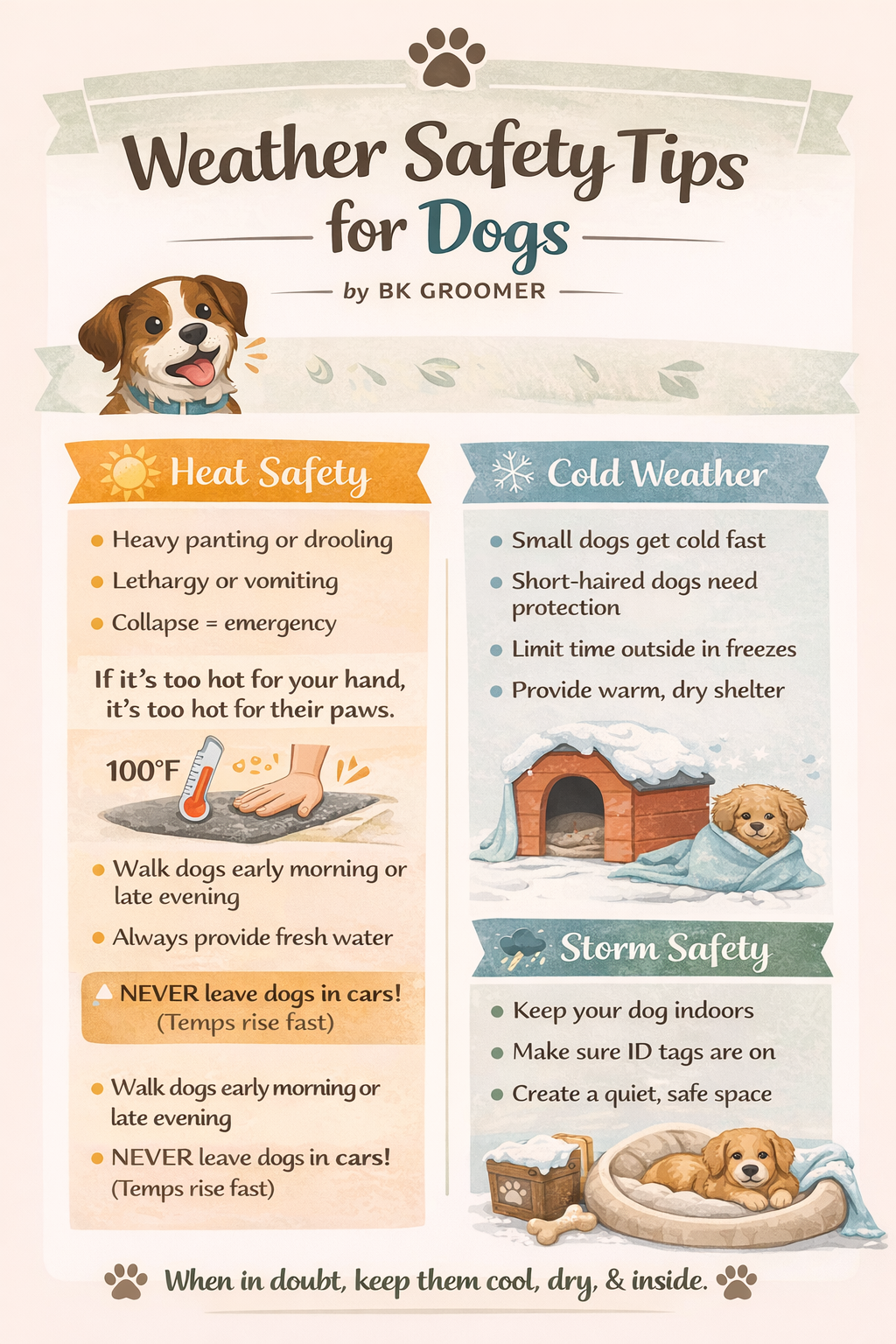
• Heavy panting
• Drooling
• Lethargy / slowing down
• Vomiting
• Collapse (emergency)
🐾 Pavement Rule
If it’s too hot for your hand, it’s too hot for their paws.
• Test pavement for 5–7 seconds
• Asphalt gets MUCH hotter than air temp
🚗 Never Leave Dogs in Cars
Even “just a minute” can become deadly.
• Temps rise FAST—even with windows cracked
• This is one of the most common emergencies
💧 Prevention Tips:
• Walk early morning or late evening
• Always bring water
• Provide shade outdoors
• Keep grooming schedules consistent (matted coats trap heat)
Weather Safety
Always prioritize their safety and comfort!
❄️ Cold Weather
Even in Texas, this matters during freezes.
🧊 Risks:
• Small dogs get cold quickly
• Short-haired dogs need protection
• Wet + cold = dangerous fast
• Dangerous for all breeds
🏠 Simple Safety:
• Limit outdoor time
• Dry them off if wet
• Provide warm bedding/shelter
⚡ Storm & Anxiety Safety
This is something a lot of people forget, and also applies to fireworks!
⛈️ During Storms:
• Keep dogs indoors and secure
• Loud noises can cause panic/escape
• Make sure ID tags are on
🐶 Comfort Tips:
• Create a safe, quiet space
• May need a vet approved calming aid
• Stay calm (they feed off your energy)
⚠️ Groomers Note:
We often see more matting, skin issues, and discomfort during extreme weather- especially in the heat.
Regular grooming isn’t just about looks- it helps your dog stay comfortable and safe.
When in doubt, it’s always safer to keep then dry and inside.
🚨 If you think a dog is in danger or in need of help in a storm or extreme weather, please contact the following agencies at the links below!
First Aid Basics
Quick help in the moment- always get to a vet.
🚨 When It’s an Emergency
Go to a vet immediately if you notice:
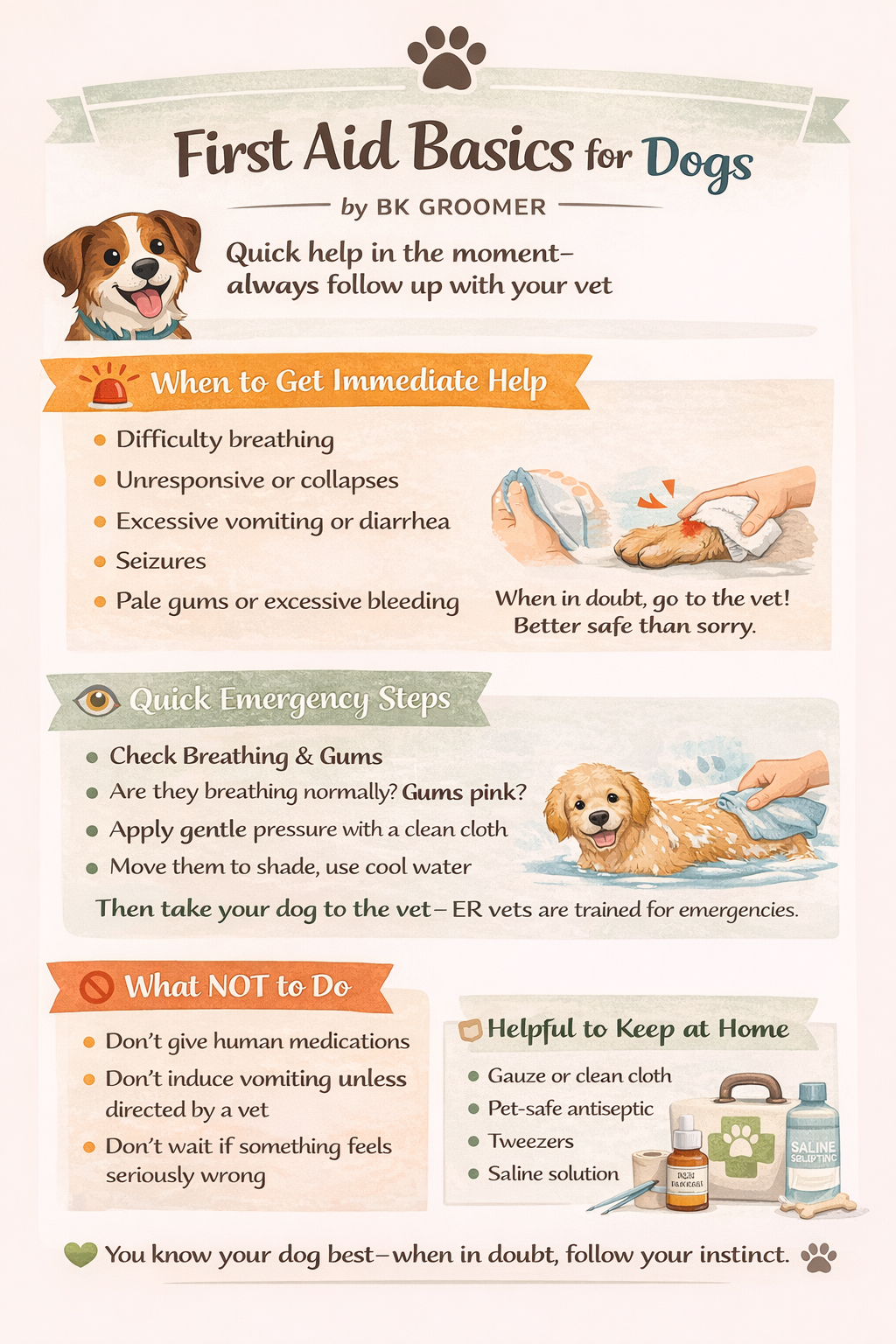
• Difficulty breathing
• Collapse or unresponsiveness
• Continuous vomiting or diarrhea
• Seizures
• Pale gums or excessive bleeding
When in doubt—go. It’s always okay to be cautious.
👀 Check Your Dog (Quick Assessment)
Stay calm and do a quick check:
• Breathing: Is it normal, fast, or struggling?
• Gums: Should be pink (pale/white = concern)
• Behavior: Acting normal or suddenly off?
Even small changes can mean something bigger.
🩹 Minor Wounds & Bleeding
• Apply gentle pressure with a clean cloth
• Keep your dog calm and still
• Clean lightly if needed (no harsh chemicals)
👉 If bleeding doesn’t stop within a few minutes → vet visit
🚫 What NOT to Do
• Don’t give human medications
• Don’t force vomiting unless instructed by a vet. seek vet advice first
• Don’t wait too long “to see if it passes”
🤢 Vomiting or Upset Stomach
• Remove access to food temporarily
• Offer small amounts of water
• Monitor closely
👉 Call your vet if:
• It continues
• There’s lethargy
• You suspect they ate something unsafe
🌡️ Overheating (Quick Action)
• Move to a cool, shaded area immediately
• Offer small amounts of water
• Use cool (not ice-cold) water on body
👉 Then go to a vet—heat issues escalate quickly
🐾 Injured Paw or Limping
• Check for debris (stick, thorn, etc.)
• Keep them from walking on it
• Avoid wrapping too tightly
👉 If limping continues → vet check
☎️ Always Call for Help
• Your vet
• Emergency vet clinic
• ASPCA Animal Poison Control Center
You’re never wrong for asking questions.
Links for further education:
AVMA First Aid Tips: Official American Veterinary Medical Association guides for injuries, heatstroke, and bleeding.
AKC First Aid Advice: American Kennel Club advice on treating minor cuts, burns, and bruises.
Red Cross Pet First Aid Class: Online training for CPR, wound care, and choking.
VCA Animal Hospitals Guide: Detailed instructions on handling, muzzling, and handling shock.
Bond Vet First Aid Guide: Comprehensive guide on necessary kit supplies and proper procedures.
Essential dog first aid involves staying calm, securing the scene, muzzling if necessary to prevent biting, and checking ABCs (Airway, Breathing, Circulation). Key supplies include gauze, vet wrap, antiseptic wipes, tweezers, and hydrogen peroxide (3%) to induce vomiting only under vet guidance. Immediate veterinary care is crucial for serious injuries. Always educate yourself before the emergency happens! ⚠️ Groomers Note:
You know your dog better than anyone. If something feels off—even if you can’t explain it—trust that instinct. Catching things early can make all the difference.
🐾 If You LOSE Your Dog
Take a breath—most dogs are found close to home.
Start here:
• Check your home, yard, garage, and nearby hiding spots
• Call their name calmly (not panicked yelling)
• Bring treats or something familiar
Then:
• Contact your vet and nearby clinics
• Call local shelters & animal control
• Post on neighborhood apps like PawBoost or local FB groups
• Share clear photos + last known location
Dogs often stay within a small radius—don’t lose hope.
Lost or Found
What to do in real life situations.
⚠️ If You’re Concerned About a Dog’s Welfare
Signs to watch for:
• No access to water or shelter
• Left outside in extreme heat or cold
• Visible injury or severe neglect
• Constant distress (crying, pacing, etc.)
What you can do:
• Document what you see (dates, photos if safe)
• Contact local animal control
• Reach out to organizations like Houston SPCA
Lead with concern, not assumption. Sometimes people need help, too.
Report Animal Cruelty Online in Houston, TX:
Harris County Animal Cruelty Taskforce
Call: 832-927- 7297 or 927paws.org
Primary Reporting Channels
Emergency (Immediate Danger): Call 911.
Harris County Animal Cruelty Taskforce: Call 832-927-PAWS (7297) or file a report at 927paws.org.
Houston SPCA: Call 713-869-7722 or use their online cruelty report.
City of Houston (BARC): Call 311.
Houston Police Animal Control: Call 713-884-3131.
Precinct One Animal Cruelty Division: Email: animalcruelty@cn1.hctx.net.
Anonymous Tips: Contact Crime Stoppers of Houston at 713-222-TIPS
🐶 If You FIND a Dog
First priority: safety (yours + theirs)
• Approach slowly and calmly
• Check for tags or ID
• Secure them if possible (leash, fenced yard, etc.)
Next steps:
• Take them to a vet or shelter to scan for a microchip
• Post in local groups/apps (like PawBoost or Local FB pages
• Include where and when you found them
Most dogs are lost, not abandoned—someone is likely looking.
⚠️ Groomers Note:
We all love dogs—that’s the common ground. Whether a dog is lost, found, or struggling, even small actions can make a big difference.
📌 Quick Reminder
• Keep ID tags updated and current photos
• Microchip your dog and make sure its registered and up to date.
• Don’t lose hope! Stay diligent in your search.