Why Brushing and Bathing Work Together
Let’s be honest—most dog parents are doing their best.
You brush your dog when you can, you give them baths when they need them, and you try to keep them clean, comfortable, and cared for. But one of the most common misunderstandings in coat care is that brushing and bathing are separate steps. In reality, they’re deeply connected—and when they don’t work together, coats can quickly go from manageable to uncomfortable.
Because a dog can look clean, fluffy, and freshly bathed on the outside while still having tangles, trapped moisture, and tight knots hidden underneath the coat.
In grooming, clean doesn’t always mean comfortable.
Brush Before the Bath
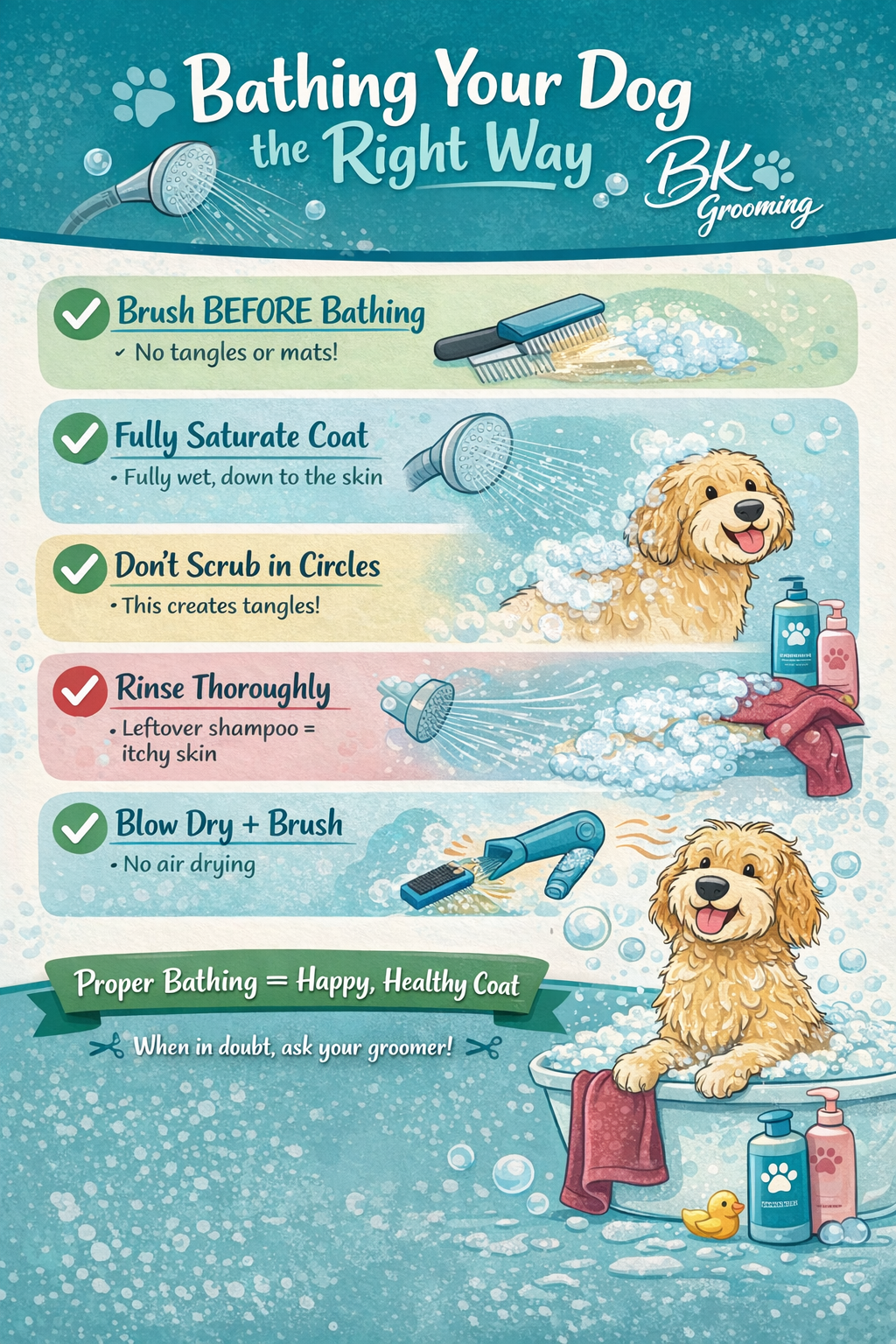
One of the most important habits you can build at home is brushing before bathing.
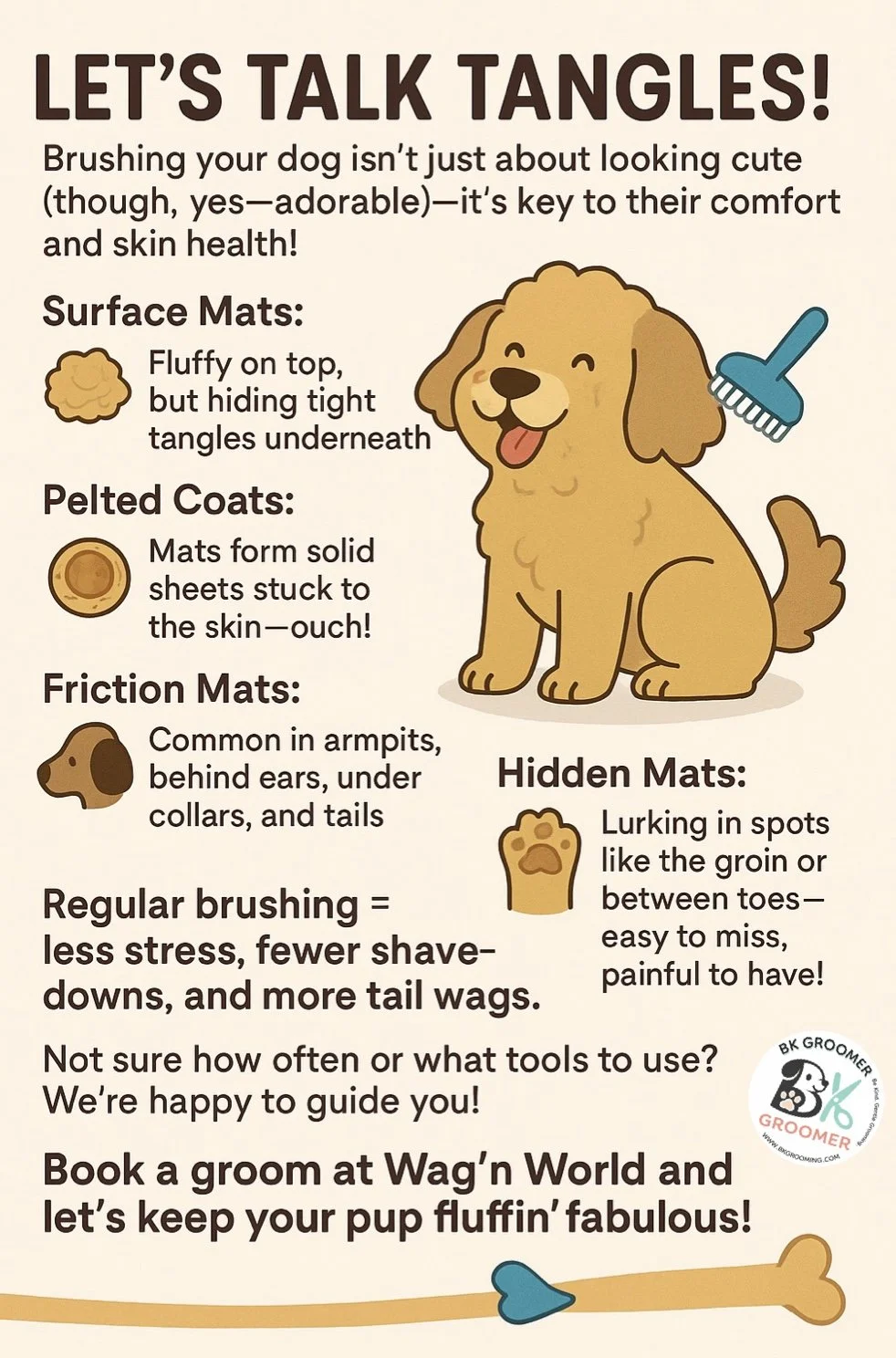
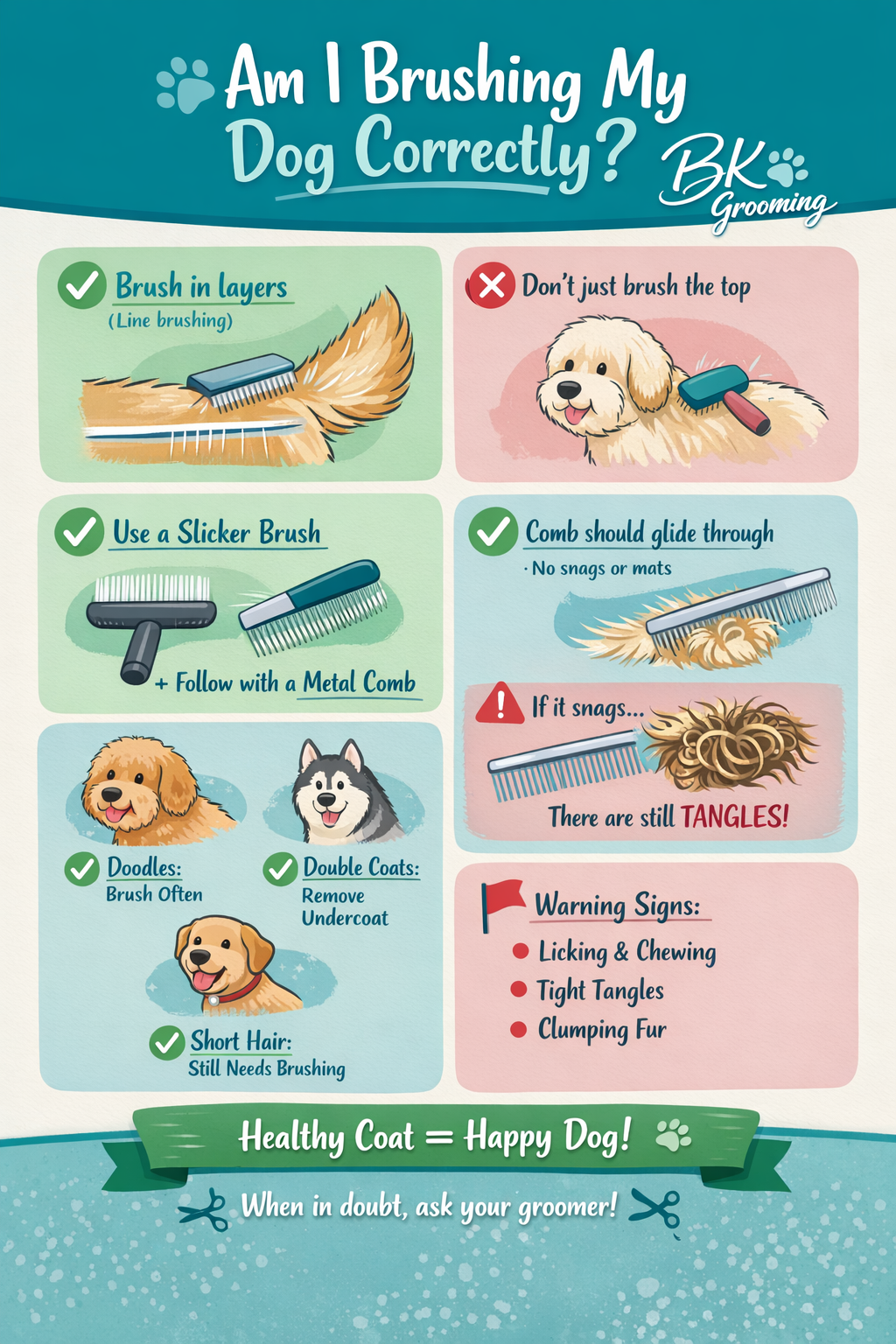
A matted or tangled coat should never go straight into water. Once the coat gets wet, existing tangles can tighten and compact even further, making them more difficult—and sometimes painful—to remove afterward. This is especially true for curly, wavy, long, or dense coats where mats often form close to the skin but stay hidden under a soft outer layer.
A gentle brushing session before the bath makes a big difference. Work slowly through the coat, and if you can, follow up with a metal comb as a final check. The comb is one of the simplest ways to tell the truth about a coat—if it moves through easily, things are in good shape. If it stops or catches, there are likely tangles still sitting deeper in the coat.
At that point, it’s better to pause and get help rather than continuing to pull through resistance. A clean dog is never worth causing discomfort.
Bathing Is More Than Soap and Water
Once the coat is fully brushed and tangle-free, bathing becomes much more effective and much more comfortable for your dog.
Using a dog-safe shampoo is important, but technique matters just as much as product. Make sure the coat is completely saturated before applying shampoo, especially on thicker or double-coated dogs where water takes longer to reach the skin than it appears.
When washing, think in terms of gently working the product through the coat rather than scrubbing aggressively. Rough washing or twisting the hair can actually create new tangles, especially in longer coats.
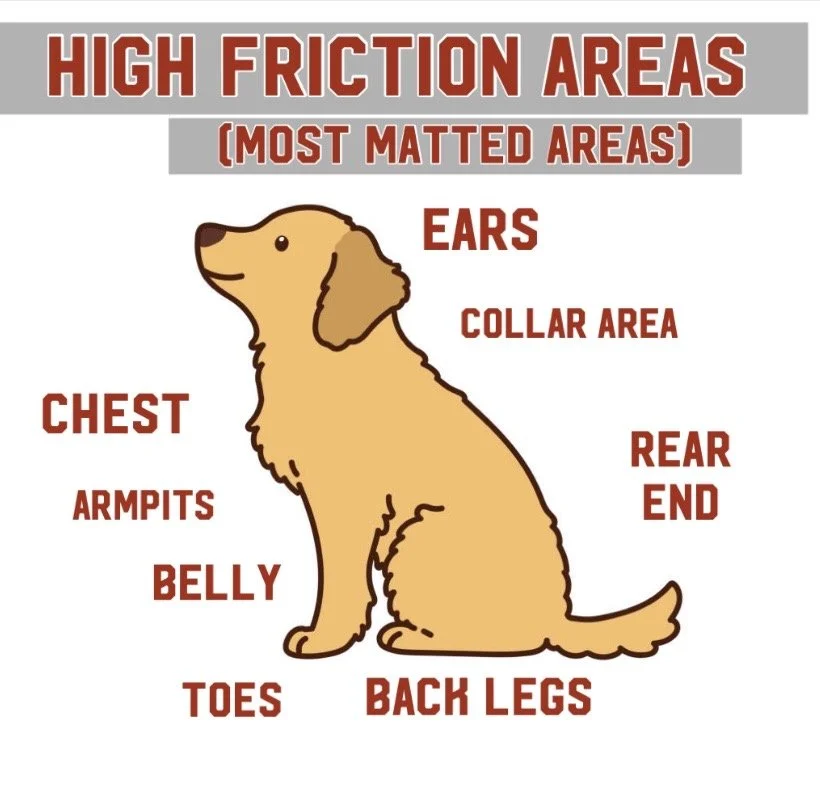
Rinsing is just as important as washing—if not more so. Shampoo that is left behind can cause itchiness, irritation, or buildup on the skin. It helps to rinse longer than you think is necessary, especially in dense areas like the legs, armpits, belly, paws, and under the tail.
Drying Matters Just as Much
A bath isn’t truly finished when your dog steps out of the tub.
Moisture left in a thick or curly coat can sit close to the skin, creating an environment where tangles form more easily and the coat becomes harder to manage over time. Instead of rubbing the coat dry, gently press with a towel to absorb water and avoid creating friction that can tighten knots.
For longer, thicker, or curlier coats, thorough drying is especially important. A properly dried coat separates more easily and stays cleaner longer.
If your dog is nervous about dryers or the noise and sensation feels overwhelming, that’s something to be mindful of rather than forcing through at home. Many dogs do much better with controlled, professional drying where the process can be introduced gradually and safely.
What Groomers See All the Time
One of the most common situations groomers encounter is a dog that appears perfectly clean after a bath, but still has hidden tangles or damp areas underneath the coat.
That combination—moisture plus tangles—is what often leads to matting, discomfort, or unexpected grooming challenges later on.
This is why professional grooming isn’t just about appearance. It’s about making sure the coat is actually healthy, not just freshly washed.
The Simple Truth About Coat Care
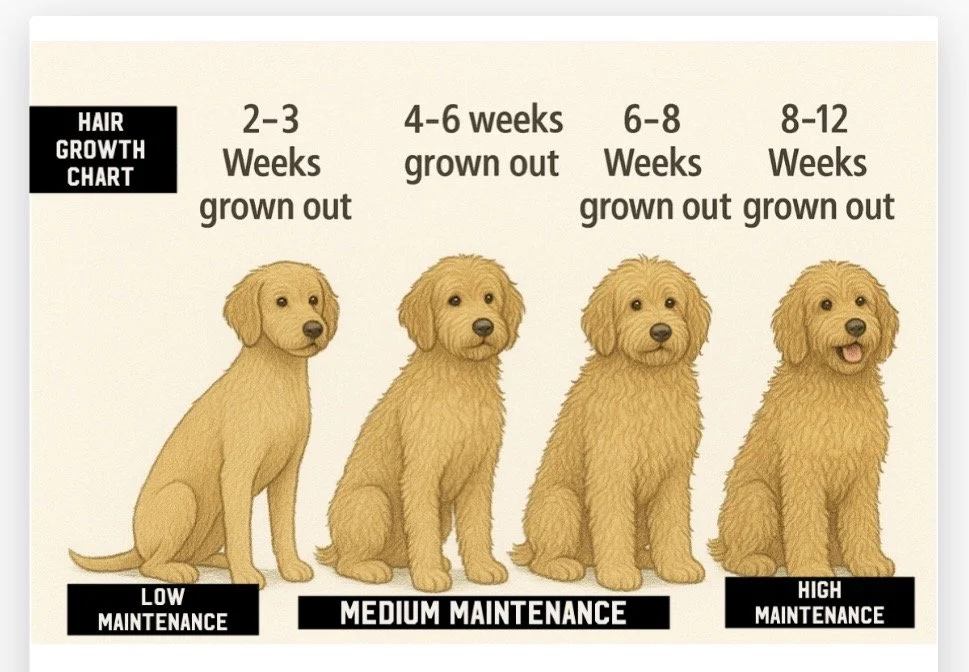
Good coat care doesn’t need to be complicated, but it does need to be consistent.
Brush before the bath so tangles don’t tighten. Rinse thoroughly so skin stays comfortable. Dry completely so moisture doesn’t get trapped in the coat.
And when things start to feel overwhelming or mats begin to form, that’s the moment to involve your groomer—not after they’ve become painful or difficult to manage.
Because grooming isn’t just about keeping your dog looking clean.
It’s about keeping them comfortable in their skin, and making every step of care as kind and stress-free as possible.