Why Grooming Confidence Starts at Home
One of the most common things I hear from pet parents is, "My dog hates being groomed."
Sometimes it's nail trims. Sometimes it's the dryer. Sometimes it's having their feet touched or standing on the grooming table. Whatever the trigger may be, many owners worry that their dog is being difficult or that grooming simply isn't something they'll ever learn to tolerate.
In most cases, that's not what's happening at all.
Grooming asks a lot of dogs. Imagine being placed in a new environment filled with unfamiliar smells, sounds, and activity. Someone begins handling sensitive areas like your paws, ears, face, and tail while strange tools buzz, vibrate, and blow air around you. For dogs who haven't had positive experiences with these sensations, grooming can feel confusing, overwhelming, or even scary.
The encouraging part is that confidence can be taught.
One of the most effective ways to help a dog feel comfortable during grooming is through a process called desensitization. While the word sounds technical, the idea is actually very simple. Instead of expecting a dog to immediately accept something they find uncomfortable, we introduce it gradually and create positive experiences along the way.
Think about nail trims as an example. For a nervous dog, the goal isn't to suddenly trim every nail without a reaction. The first step may simply be touching a paw and rewarding calm behavior. Later, it might be holding the paw for a few seconds. Then introducing the nail trimmers. Then trimming a single nail. Each small success helps build confidence for the next step.
That's why I often tell clients that the goal isn't perfection—it's progress.
Many people assume desensitization is only for fearful dogs, but almost every dog benefits from gentle grooming practice at home. Puppies, especially, learn a tremendous amount from their early experiences. A puppy who regularly has their paws handled, ears touched, and coat brushed in a calm, positive way often grows into an adult dog who views grooming as a normal part of life rather than something to fear.
Older dogs can benefit too. Senior dogs may develop arthritis, mobility challenges, or new sensitivities that make grooming feel different than it did years ago. Rescue dogs may arrive with unknown experiences that affect how they feel about handling. Even dogs who generally enjoy grooming can become anxious if they only visit a groomer when something uncomfortable, like a difficult nail trim, needs to be done.
The good news is that confidence can be built at any age.
Some of the best grooming preparation happens during ordinary moments at home. While your dog is relaxed beside you, gently touch their paws, lift an ear, hold a leg briefly, or brush a small section of coat. Pair those experiences with praise, treats, or affection so they begin to associate handling with good things.
You can also introduce grooming-related sounds in a low-pressure way. The hum of an electric toothbrush, a beard trimmer, or a hair dryer from across the room can help dogs become familiar with noises that often feel intimidating in a grooming salon. The key is moving slowly and paying attention to how your dog responds.
One mistake I see well-meaning owners make is trying to push through fear. When a dog pulls away, freezes, pants heavily, hides, or becomes increasingly distressed, they're sharing important information. Those reactions aren't signs that training has failed. They're signs that the current step may be too difficult.
Building confidence works best when dogs feel successful. Sometimes that means ending a practice session after thirty seconds because your dog handled those thirty seconds beautifully. Small victories may not seem impressive in the moment, but they're often the foundation for much bigger successes later.
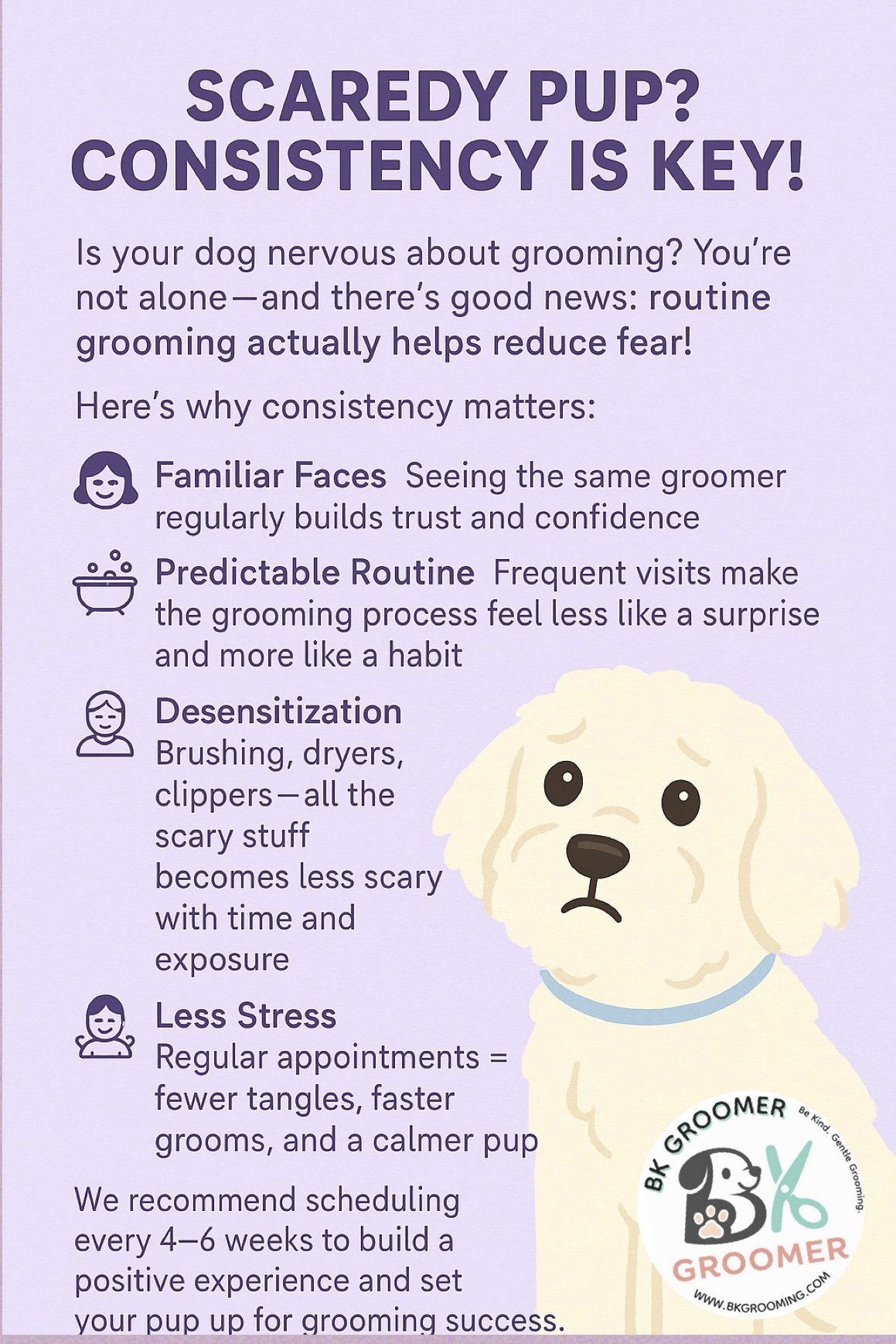
Finding the right groomer can also make a tremendous difference. Dogs benefit from familiarity, consistency, and relationships just as people do. When a dog sees the same groomer regularly, trust has an opportunity to grow. Over time, the salon becomes more predictable, the routines become familiar, and the groomer becomes someone the dog recognizes rather than a stranger handling them.
This is one reason I always encourage owners to be honest about their dog's struggles. Tell your groomer if your dog dislikes nail trims, becomes nervous around dryers, has a history of fear, or needs extra time. Those details help us create a plan that supports the individual dog rather than expecting every appointment to look exactly the same.
One of the most rewarding parts of grooming is watching fearful dogs gain confidence over time. Success doesn't always mean standing perfectly still for every service. Sometimes success looks like a dog calmly offering a paw when they couldn't do that before. Sometimes it's tolerating the dryer for a few extra minutes. Sometimes it's simply walking into the salon with less worry than they had during the last visit.
Those moments matter because they're signs that trust is growing.
At the end of the day, grooming isn't just about keeping a dog clean or maintaining a haircut. It's about helping dogs feel safe while we care for them. Every positive experience builds confidence, and every positive interaction helps strengthen the relationship between dogs, their owners, and the people caring for them.
At Be Kind Grooming, that's always the goal. A beautiful groom is wonderful, but what matters most is helping dogs feel understood, respected, and a little more confident than they were the day before.
Because grooming confidence isn't built through force.
It's built through trust.