How To Ask For The Groom you Want
Clear Communication = Happy Results
One of the most important parts of a successful grooming appointment happens long before the clippers ever turn on. It starts with communication.
Groomers genuinely want to give you a result you love while also keeping your dog comfortable and safe. The best outcomes almost always happen when everyone is on the same page from the beginning.
A lot of stress or disappointment in grooming doesn’t come from the haircut itself, but from unclear expectations. The good news is that small changes in how you describe what you want can make a big difference.
Helping Your Groomer Understand Your Vision
Phrases like “just a trim” or “not too short” are very common, but they can mean something different to every person. What feels like a light tidy to one person may feel very short to another.
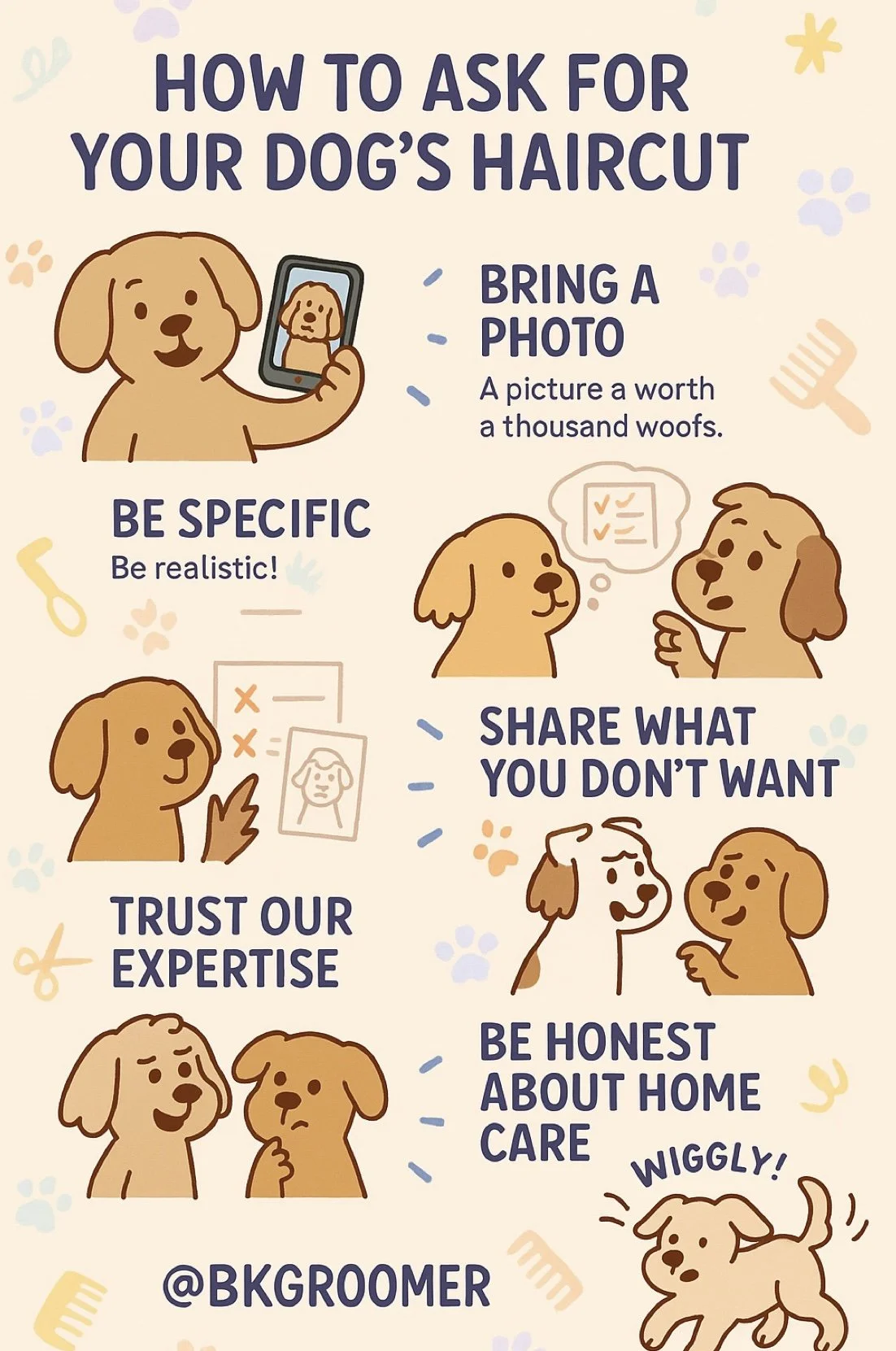
Instead, more specific descriptions tend to help a lot. Even simple details like “about half an inch off the body,” “keep the legs fluffy but tidy,” or “shorter on the body with a fuller face” give your groomer a clearer direction to work with.
If you’re unsure how to describe what you want, that’s completely normal. Grooming has its own language, and most groomers are more than happy to help translate your ideas into something achievable for your dog.
Photos Are One of the Best Tools
Photos can be incredibly helpful, especially when words feel limited. A picture gives context that descriptions sometimes can’t fully capture.
It can be helpful to bring photos of styles you like, but even more useful can be photos of your own dog after a groom you were happy with in the past. Pointing out specific details you liked—such as the face shape, ear length, or body style—helps guide the groom more accurately.
At the same time, it’s important to remember that photos are a reference, not a guarantee. They help guide the direction, but they always need to be adjusted to fit your dog’s coat type, condition, and comfort level.
Every Dog’s Coat Tells a Different Story
Not every haircut is possible on every dog, and that’s not about skill—it’s about coat type and condition.
Curly coats, double coats, fine coats, and heavily dense coats all behave differently. Add in factors like matting, previous grooming history, or skin sensitivity, and the same “style” may need to be adapted in different ways.
A responsible groomer may suggest adjustments not because they’re ignoring your request, but because they’re trying to make sure the result works for your dog’s coat and wellbeing.
Honesty About Home Care Matters
One of the most helpful things you can share with your groomer is what life looks like at home.
How often your dog is brushed, whether they tend to mat easily, and how much maintenance you realistically want to keep up with all help guide the grooming process. A style that looks great on day one but becomes unmanageable within a week isn’t a good long-term fit for most families.
When we understand your home routine, we can suggest a haircut that not only looks good when you leave the salon, but continues to work for your lifestyle between appointments.
Your Dog’s Comfort Is Part of the Conversation
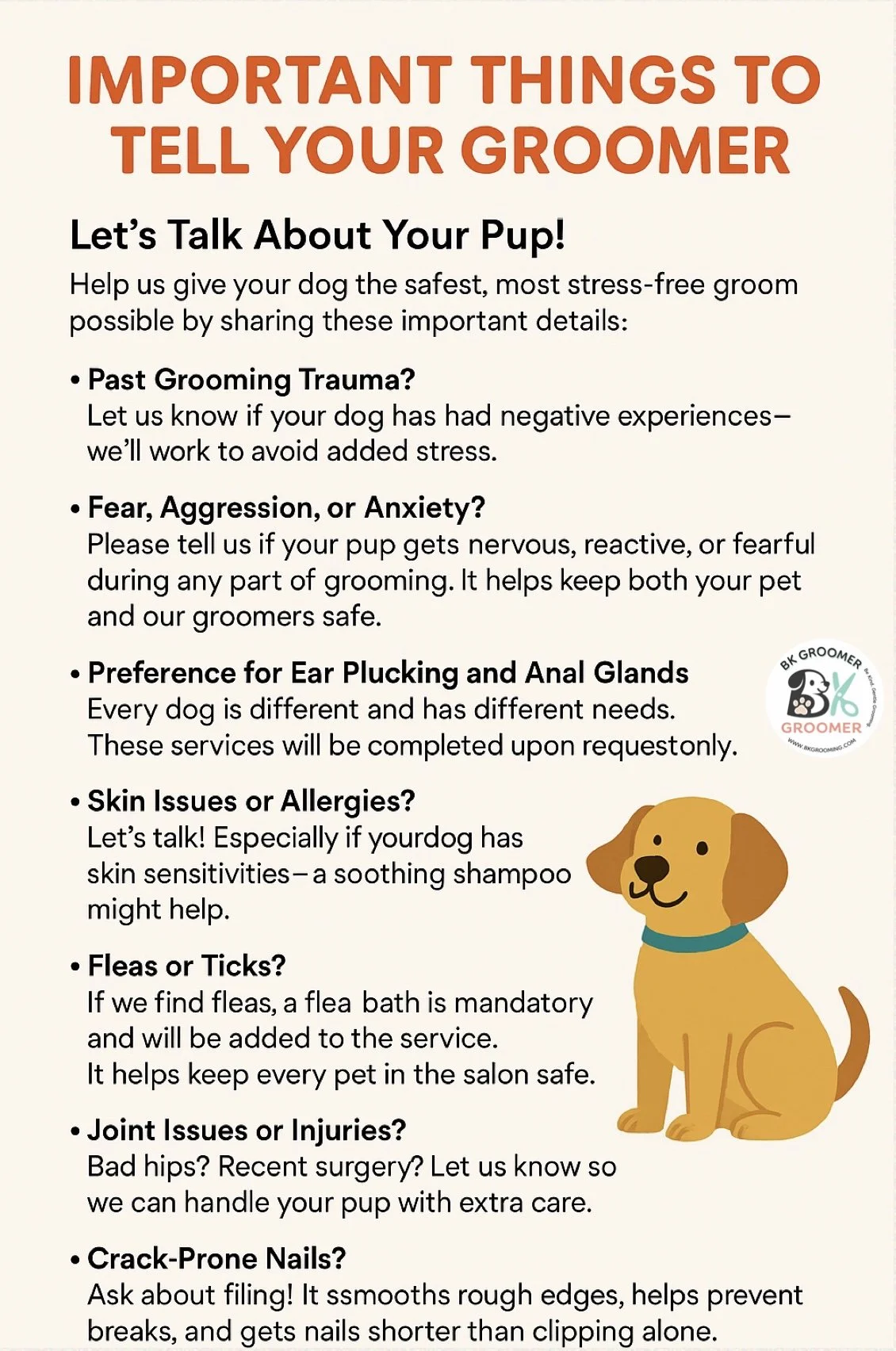
Grooming is not just about appearance—it’s also about experience. Every dog has their own personality, comfort level, and history with grooming.
Some dogs are relaxed and confident. Others are nervous, sensitive, or still learning to trust the process. Letting your groomer know if your dog has specific fears, dislikes, or past challenges helps us adjust how we handle them throughout the appointment.
Sometimes that means slowing things down. Sometimes it means changing the order of the groom. Sometimes it simply means working more gently around certain areas.
These small adjustments can make a big difference in how your dog feels about grooming over time.
Why Consistency Helps
When dogs see the same groomer regularly, everything becomes easier. The groomer learns your preferences, your dog’s coat behavior, and what works best for both of you.
Over time, this consistency leads to more predictable results, less stress for your dog, and a smoother overall experience. Trust builds gradually, and that trust shows in both the groom and your dog’s comfort level.
A Final Thought
Grooming works best when it’s a partnership.
Clear communication, realistic expectations, and trust between you and your groomer all come together to create the best outcome—not just in appearance, but in experience.
A great groom isn’t just about how your dog looks when they leave the salon. It’s about your dog feeling safe, understood, and cared for throughout the process.
When those things align, the results naturally follow.