Matting 101: What Every Parent Should Know
Matting is one of the most common issues we see in grooming, and also one of the most misunderstood. It’s not just about messy fur or a neglected coat. When mats form, they can have a real impact on a dog’s comfort, movement, and overall skin health.
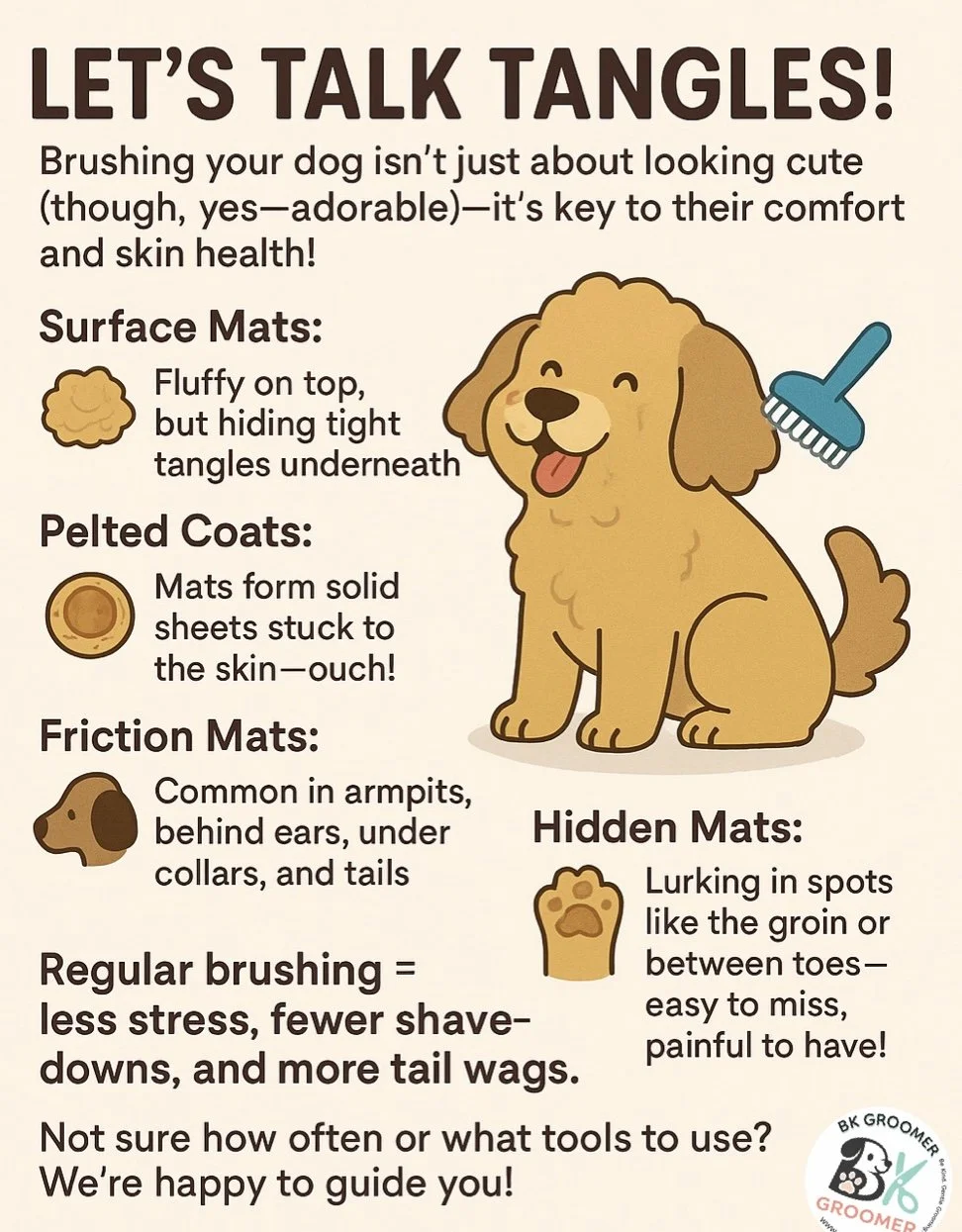
Matting happens when loose or shed hair becomes tangled and begins to tighten into dense knots close to the skin. Over time, those knots can grow, tighten further, and form large sections of compacted coat. In severe cases, the coat can become so tightly packed that it creates a solid layer over the body, sometimes referred to as “pelting.”
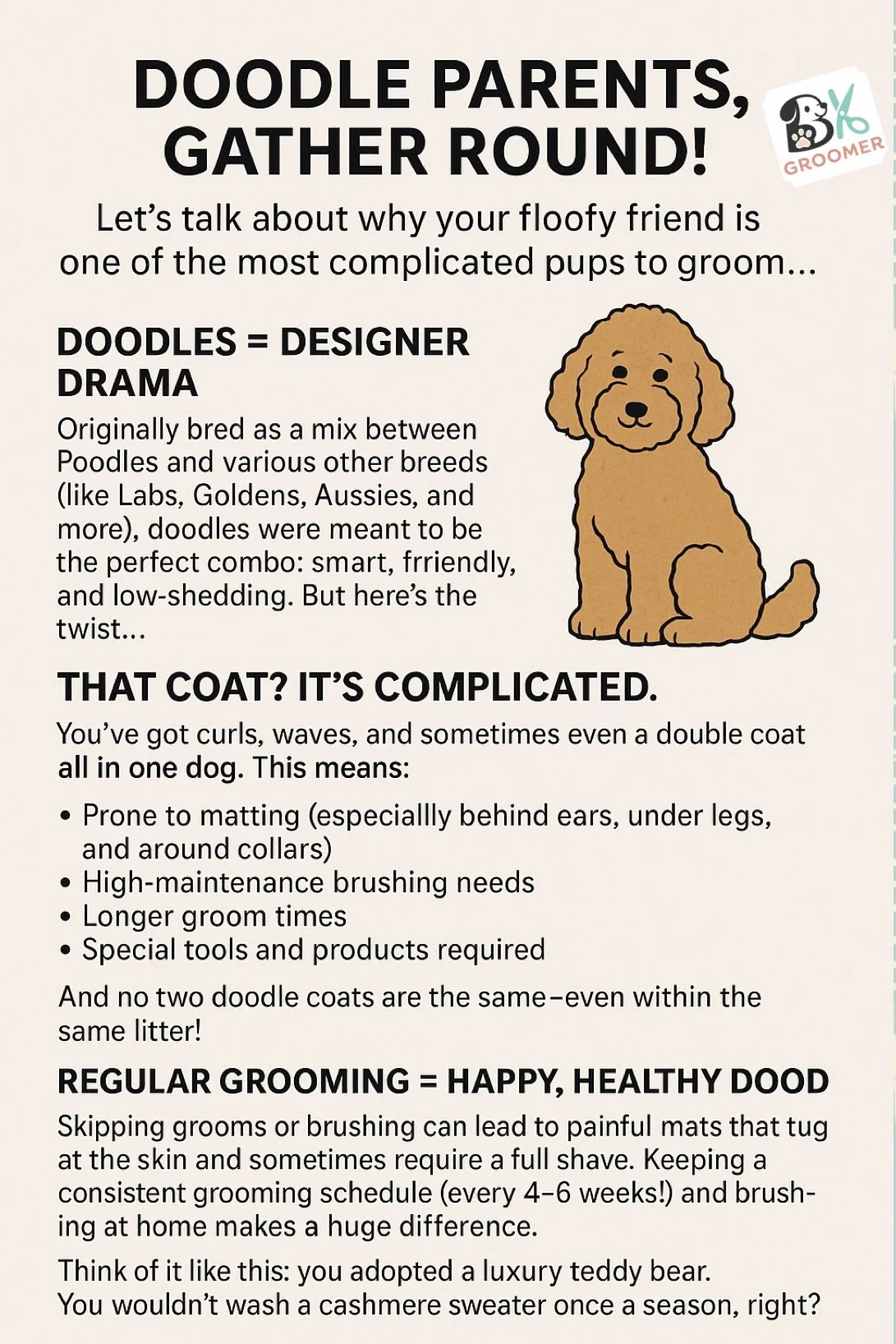
Some of the most common areas for matting are behind the ears, under collars or harnesses, in the armpits, along the legs, and around the tail or sanitary areas. These are places where friction, movement, and trapped moisture make tangles form more quickly than anywhere else.
The important thing to understand is that matting doesn’t just sit on top of the coat. It pulls directly on the skin. Over time, this constant tension can become uncomfortable or even painful for the dog. Many people don’t realize that what looks like “just a few knots” on the outside may actually be much tighter and more widespread underneath.
When matting becomes severe, it can restrict movement, especially around the legs and joints. It can trap moisture against the skin, which may lead to irritation or infection. It can also hide skin issues such as sores, hot spots, or parasites that would otherwise be easy to notice. In more advanced cases, mats can even cause bruising or damage simply from the constant pulling on the skin.
One of the most common questions we hear is, “Can’t you just brush it out?” The honest answer is that it depends on the severity. Small tangles can sometimes be worked through safely, but once mats become tight, brushing them out is not only difficult—it can be painful for the dog.
To help visualize it, imagine your hair being pulled tightly in several directions at once and being unable to release that tension. Or think about clothing that is far too tight in multiple areas of the body, especially around joints like the armpits or behind the knees. Even simple movement can feel restricted. That’s similar to what a matted coat can feel like for a dog.
When mats are very tight, separating them involves pulling apart dense knots that are often close to the skin. Even when done carefully, this process can be uncomfortable and stressful for the dog. This is why groomers will often recommend shaving the coat instead of trying to dematt it. In many cases, removing the coat short is actually the kindest and safest option, because it allows the dog immediate relief.
De-matting also takes significantly more time and care than a standard groom. It requires patience, specialized tools, frequent breaks, and a very gentle approach to avoid causing injury or unnecessary stress. This is one of the reasons additional charges are often associated with heavily matted dogs—not as a penalty, but because the process requires far more time and attention to complete safely.
In some severe cases, matting may also require coordination with a veterinarian, especially if there are concerns about skin damage, infection, or extreme discomfort under the coat.
The good news is that matting is almost always preventable with consistent care at home. Regular brushing is one of the most important habits you can build, but it needs to be done thoroughly. That means brushing beyond the top layer of the coat and making sure the comb can move through all the way down to the skin. If a comb cannot pass through easily, there may still be tangles hiding underneath the surface.
Paying attention to high-friction areas also makes a big difference. Behind the ears, under harnesses or collars, around the legs, and in the armpits are all places that benefit from regular checking and brushing. Removing collars or harnesses periodically to check underneath can also help prevent surprise matting in hidden spots.
Consistency matters more than intensity. A few minutes of regular maintenance is far more effective than occasional long grooming sessions once tangles have already formed.
If matting does occur, it is important to know that it is extremely common and not something to feel ashamed about. Life gets busy, coats change quickly, and some dogs are simply more prone to tangling than others. Our role as groomers is not to judge, but to help your dog feel comfortable again and guide you on how to prevent it moving forward.
Sometimes it helps to understand matting through sensation rather than appearance. A tight mat can feel similar to having hair pulled into a very tight style that cannot be released, or wearing clothing that is several sizes too small in key areas of the body. Now imagine not being able to take it off. Over time, that constant pressure is what leads to discomfort for many dogs.
When we recommend shaving out mats instead of brushing them, it is not about convenience or preference. It is about relieving discomfort as quickly and safely as possible so the dog can feel better immediately and start fresh with a healthy coat.
At the end of the day, matting is not a reflection of failure. It is something that can happen easily, even in well-loved and well-cared-for dogs. What matters most is how we respond to it and how we move forward to keep the coat healthy and manageable.
Our goal is always the same: to help dogs feel comfortable in their skin again and to support pet parents with realistic, kind, and sustainable coat care moving forward.