The History of Dog Grooming: From Survival to Spa Days.
Dog grooming might feel like a modern luxury—fluffy haircuts, spa days, bows and bandanas—but it actually has deep, practical roots. Long before grooming became a service, it was about health, function, and the bond between humans and dogs.
Where It All Began:
Dogs were domesticated between 15,000 and 30,000 years ago, and with that relationship came the earliest forms of grooming.
Back then, “grooming” wasn’t about style—it was about survival.
People would:
Remove burrs, dirt, and parasites from their dogs’ coats
Trim fur to help with movement or temperature control
Keep wounds clean to prevent infection
Even without modern tools, early humans used primitive combs, stones, and blades to maintain their dogs’ coats. Grooming, even in its simplest form, was already an act of care and necessity.
Ancient Civilizations & Early Care (3000 BCE – 500 CE)
As societies developed, grooming became more intentional.
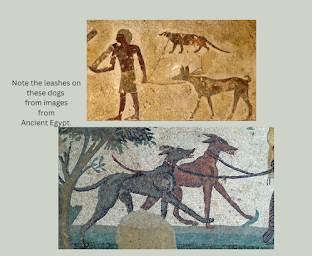
In Ancient Egypt (around 3000 BCE), dogs were not only workers but companions and symbols of status. Artwork from this time shows sleek, well-kept dogs, and it’s believed that early bathing methods and natural oils were used to maintain coat health—especially in harsh desert climates.
Later, in Ancient Greece and Ancient Rome (around 500 BCE – 400 CE), written records describe more structured care. Romans, in particular, were known to:
Wash dogs using water mixed with oils
Remove loose hair and debris with scraping tools
Maintain hunting dogs to keep them agile and effective
This period marks one of the first shifts toward routine grooming—not just for survival, but for maintenance and pride.
Working Dogs & Purposeful Grooming
As different breeds developed over time, grooming started to serve very specific purposes.
For example:
Water dogs like the Poodle were clipped in ways that protected vital organs while allowing them to swim efficiently
Herding and farm dogs were brushed to prevent painful matting
Hunting dogs were kept clean and functional for the field
These early grooming styles weren’t random—they were intentional, practical, and tailored to each dog’s role.
The Middle Ages to Early Companion Care (500–1500 CE)
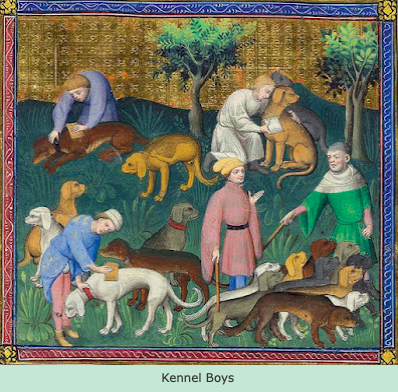
During the medieval period, most grooming still focused on working dogs. However, among European nobility, especially between 1200 and 1400 CE, small companion dogs began receiving more attention.
Lapdogs owned by aristocrats were:
Brushed regularly
Kept cleaner than working animals
Sometimes perfumed or adorned
This is one of the earliest signs of grooming shifting toward aesthetics and status—not just function.
Grooming Becomes an Art
By the time we move beyond the Middle Ages, grooming continues to evolve alongside human lifestyles. Dogs were no longer just workers—they were companions and reflections of their owners.
Coats were styled more intentionally, and grooming became part of how people expressed care, pride, and even identity through their pets.
The Rise of Breed Standards (1700s–1800s)
The 18th and 19th centuries marked a major turning point in grooming history.
In 1873, England established the Kennel Club, followed by the American Kennel Club in 1884.
These organizations helped:
Define official breed standards
Standardize grooming styles
Turn grooming into a skilled and recognizable practice
Breed-specific trims became increasingly important—especially for show dogs and purebred lines. This is when grooming really begins to resemble what many people recognize today.
Early Professional Grooming (1900–1950)
By the early 20th century, grooming began shifting into a profession.
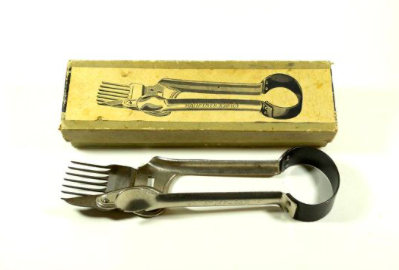
Around 1900–1920, the first widely available grooming tools—like manual clippers and specialized brushes—became accessible
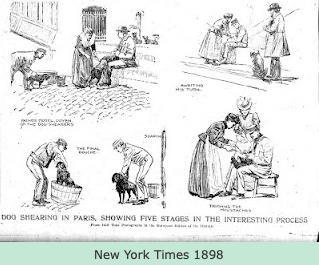
By the 1930s, grooming services started appearing in cities as pet ownership increased
After World War II, the pet care industry expanded rapidly in the United States
This era marked the transition from at-home care to professional grooming services.
The Pet Care Boom (1950s–1990s)
Post-war life brought a surge in pet ownership, especially in suburban homes.
During this time:
Electric clippers became standard (1950s–60s)
Pet grooming salons became more common (1960s–70s)
Grooming education and techniques became more refined
By the 1980s and 1990s, grooming was widely recognized as a skilled trade, with competitions, certifications, and more advanced styling techniques emerging.
Modern Grooming: Health, Comfort, and Trust
Today, grooming sits at a beautiful intersection of health, comfort, and style.
Organizations like the National Dog Groomers Association of America now provide training and certification, helping set standards across the industry.
While some dogs still follow traditional breed clips, most grooming today focuses on:
Keeping dogs comfortable and mat-free
Maintaining healthy skin and coat
Creating a positive, low-stress experience
Modern grooming has also evolved to include fear-free techniques, mobile grooming services, and a stronger understanding of canine behavior and wellness.
At its core, grooming has come full circle. It’s no longer just about appearance—it’s about well-being.
A Gentle Perspective
I always come back to this idea:
Grooming isn’t just something we do to dogs—it’s something we do for them.
Understanding the history of grooming reminds us that:
Every brush-out has a purpose
Every haircut should consider the dog’s comfort
Every appointment is an opportunity to build trust
Because at the end of the day, grooming has always been about care.
Final Thought
From ancient survival to modern self-care, grooming has evolved—but its heart has stayed the same.
It’s about helping dogs feel good in their bodies, stay healthy, and live comfortably alongside the people who love them.
And when we approach grooming with kindness and patience, we’re continuing a tradition that’s been thousands of years in the making.
Sources & Further Reading
If you’re curious to learn more about the history of dog grooming and breed standards, these are great places to explore:
American Kennel Club (history of breeds and grooming standards)
ASPCA (evolution of animal care)
The Kennel Club (breed standards and show grooming history)